Ages 6–10
Allowance & Chores
This is the age when money gets real. Your child can count it, carry it, and — most importantly — make mistakes with it. An allowance isn't about the amount. It's a small, safe practice field where those mistakes cost a few dollars instead of a few hundred later.

How an allowance teaches
An allowance works when it's regular, predictable, and theirs to decide about. The same amount on the same day each week, with no strings attached to how they spend the spending part. If they blow it all on Monday and want something on Friday, the answer is a kind "that's what next week is for" — not a rescue loan. That empty-pocket Friday teaches more than any lecture.
There's no one right amount. Many families use a simple rule of thumb — for example, $1 per week for each year of age — but what matters more is that the amount is small enough to be real and steady enough to plan around. (All amounts on this site are examples, not recommendations.)

Family chores vs. paid jobs
It helps to keep two lists, and to say the difference out loud:
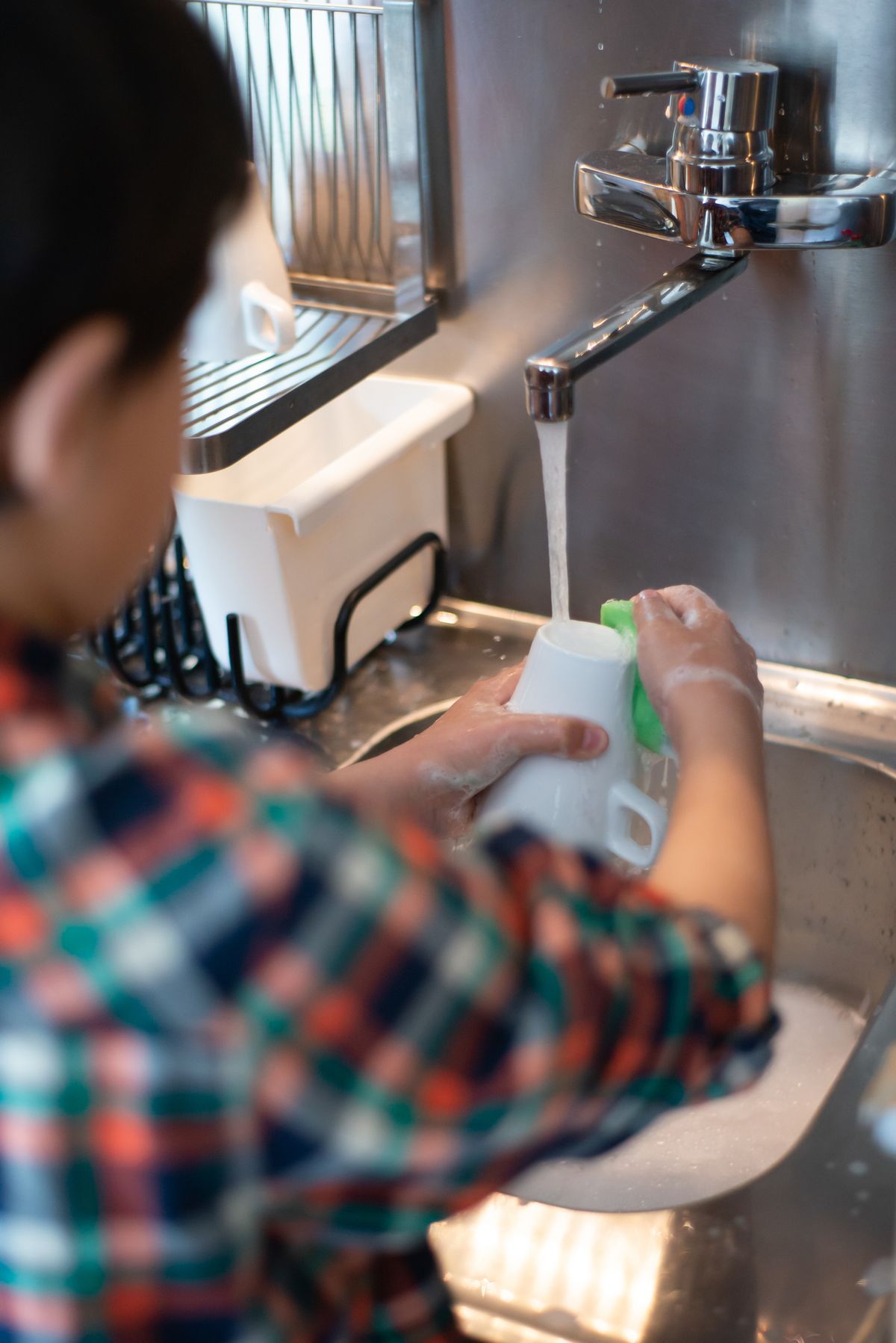
- Family chores — unpaid. Making your bed, clearing your plate, tidying your room. Everyone in the family does these because we live here together.
- Extra jobs — paid. Washing the car, helping sort the garage, raking leaves. These are above and beyond, and they can earn extra money.
Paying for every chore teaches a child that nothing gets done unless money changes hands. Keeping some chores unpaid teaches that being part of a family has its own rewards. Both lessons matter.
Allowance systems in detail
There are a few common ways families set up allowance. None is the "right" one — the best system is the one you'll actually stick with.
- Weekly allowance, no strings attached. The same amount every week, whether chores were done or not. This is the simplest system, and it works because the money is predictable — your child can plan around it. The chores still get done, but they're a family expectation, not a transaction.
- Weekly allowance tied to basic chores. The allowance comes with the expectation that everyday chores are done. If chores are skipped, the allowance is delayed — not taken away as punishment, but held until the work is done. This works if you're consistent; it falls apart if the rule changes every week.
- Base allowance plus paid extras. A small weekly base amount, plus extra money for bigger jobs beyond normal chores — washing the car, helping clean the garage, raking the yard. This is the system most families grow into, because it mirrors real life: a base income plus chances to earn more.
Whatever system you choose, write it down together and stick it on the fridge. Kids trust a system they can see. And when the system needs changing — the amount, the day, the jobs — change it together, out loud, so it stays a shared agreement instead of a surprise.
How much? Many families use about $1 per week for each year of age as a starting point — for example, $7 a week for a 7-year-old, $10 for a 10-year-old. It's only a starting point: some families give less, some more. What matters is that it's steady, small enough to be real, and affordable for you. If money is tight, even $2 a week teaches the same lessons. (All amounts on this site are examples, not recommendations.)
When to raise it. Once a year, on a birthday, is a natural time. Or when the cost of the things they're expected to buy with their own money goes up — for example, when you stop buying small treats and they start covering those themselves. Raising the amount is also a good moment to talk about what the allowance is for now.
What should allowance cover? Decide this together and be specific. A common split: parents cover needs (clothes, school supplies, food); allowance covers wants (toys, games, snacks, extras). When the boundary is clear, the "can I have" arguments get shorter — the answer is "that's what your money is for."
A sample chore chart
Here's an example of how one family might split the week. Yours will look different — the point is that everyone can see who does what, and which jobs are family jobs and which are paid extras.
| Job | Who | When | Paid? |
|---|---|---|---|
| Make bed, tidy room | Everyone | Every morning | No — family job |
| Clear own plate | Everyone | Every meal | No — family job |
| Take out trash | Rotates weekly | Twice a week | No — family job |
| Help with laundry (sort, fold) | Kids, with a parent | Weekends | No — family job |
| Wash the car | Whoever wants it | When it's dirty | Yes — extra job |
| Rake leaves / shovel snow | Whoever wants it | Seasonal | Yes — extra job |
| Help sort the garage | Whole family | As needed | Yes — extra job |
Keep the chart simple — five to seven jobs is plenty. Too many jobs and the chart becomes wallpaper nobody looks at. Review it once a month: what's working, what's not, and what should change?
Saving for something you want
Wanting is the best teacher of saving. Help your child pick one goal — a game, a bike accessory, a craft kit — and work out the plan together:
- Name the goal and the price. Write it down where they can see it.
- Count what they already have. Check the Save jar or piggy bank together.
- Figure out the gap. "It costs $24. You have $9. You need $15 more."
- Work out the weeks. "If you save $3 a week, that's 5 weeks."
Use the savings goal tracker to do the math together — kids love watching the number of weeks shrink. And when they reach the goal, go buy it together and let them pay. That moment is the payoff for the whole exercise.
Example: the $24 game
Your child wants a game that costs $24. They have $9 saved. That leaves $15 to go. Saving $3 a week from allowance, they reach it in 5 weeks. Saving $5 a week, they reach it in 3 weeks — but then there's nothing left for anything else. That trade-off is the lesson: saving faster means spending less on other things, and either choice is fine as long as it's theirs.
Sticking with a goal when it's slow
Week one of saving is exciting. Week four is boring. That's where most goals die — and where the real teaching happens. A few things that help:
- Make progress visible. A paper thermometer on the fridge, colored in a little more each week, turns slow saving into something you can see. The savings goal tracker does the same thing with numbers.
- Celebrate halfway. When the jar is half full, say so out loud. "You're halfway there!" Halfway is a real achievement, and naming it keeps the goal alive.
- Let them change their mind — once. If they decide they want a different thing instead, that's allowed. But talk it through first: "Are you sure? The new thing costs more, so it will take longer." Changing a goal after thinking it through is a decision. Changing it every week is just impulse.
- Don't top it up for them. It's tempting to quietly add a few dollars so they reach the goal faster. Don't — the waiting is the lesson, and the day they pay with their own saved money is the reward.
First spending decisions
Once your child has money of their own, the store becomes a classroom. A few practices that build good judgment:
- Compare two things. Hold up two similar items and ask: "This one costs more — what does it do that the other one doesn't?" Sometimes the answer is "nothing" — and they learn to spot it themselves.
- The 24-hour rule. For anything that costs more than a week's allowance, wait a day before buying. If they still want it tomorrow, it's a real want. If they forgot about it, the money stays saved. Put the item on a wish list so "not today" doesn't feel like "never."
- Count it out themselves. Let them count the money at the register and hand it over. Physically giving money away — and getting less back — is a lesson no app can teach.
- Talk about ads. When an ad or a video makes something look amazing, ask: "What are they trying to make you feel?" Kids who notice the trick are harder to trick.
When things go wrong
Things will go wrong. That's the point of practicing with small amounts. What to do when they do:
- They lost the money. Don't replace it. Help them retrace where it went, talk about keeping money in one place (a wallet, a jar, a pocket with a zipper), and let the loss stand. Losing $5 at age 8 is a cheap lesson in keeping track of things.
- They bought something that broke in a day. Don't say "I told you so." Ask: "What would you look for next time?" Cheap quality, no returns, buying from a friend — each has its own lesson, and the question matters more than the answer.
- They traded with a friend and got the worse end. Don't undo the trade unless it was genuinely unfair or pressured. Help them think about what a fair trade looks like, and what to say next time: "Let me think about it first."
- They lent money to a friend and didn't get it back. This one hurts, and it's a genuinely useful lesson: lending money to friends is risky, even for adults. Talk about whether to ask for it back, and agree on a rule for next time — for example, "I only lend money I can afford to lose."
- They spent everything and now want something else. The kindest answer is also the most useful: "That's what next week's allowance is for." No lecture, no rescue, no advance. The empty pocket is the teacher.
Needs vs. wants — the easy version
At this age, keep it to one question: "Do I need it, or do I want it?" Shoes with holes: need. A third water bottle in a favorite color: want. Wants are fine — they're just the things we save for instead of buying on impulse. Play the game out loud at the store: "Is this a need or a want?" Kids get good at it fast, and it becomes a habit that lasts.
Let them make small mistakes
They will buy something that breaks in a day. They will spend everything and regret it. They will trade with a friend and get the worse end of the deal. When the amount is small, these are gifts — cheap lessons in a safe place. Resist fixing it. A calm "What would you do differently next time?" teaches far more than "I told you so."
Try this week
Pick one savings goal together and write it on a piece of paper: what it is, what it costs, how much is saved already, and how many weeks to go. Stick it on the fridge. Update it every week when allowance day comes.