Ages 3–6
Save, Spend, Share
At this age, money is mostly a mystery — coins appear, things come home from the store, and nobody explains the part in between. The one idea worth teaching now is simple: money has jobs. Some of it is for saving, some for spending, and some for sharing.
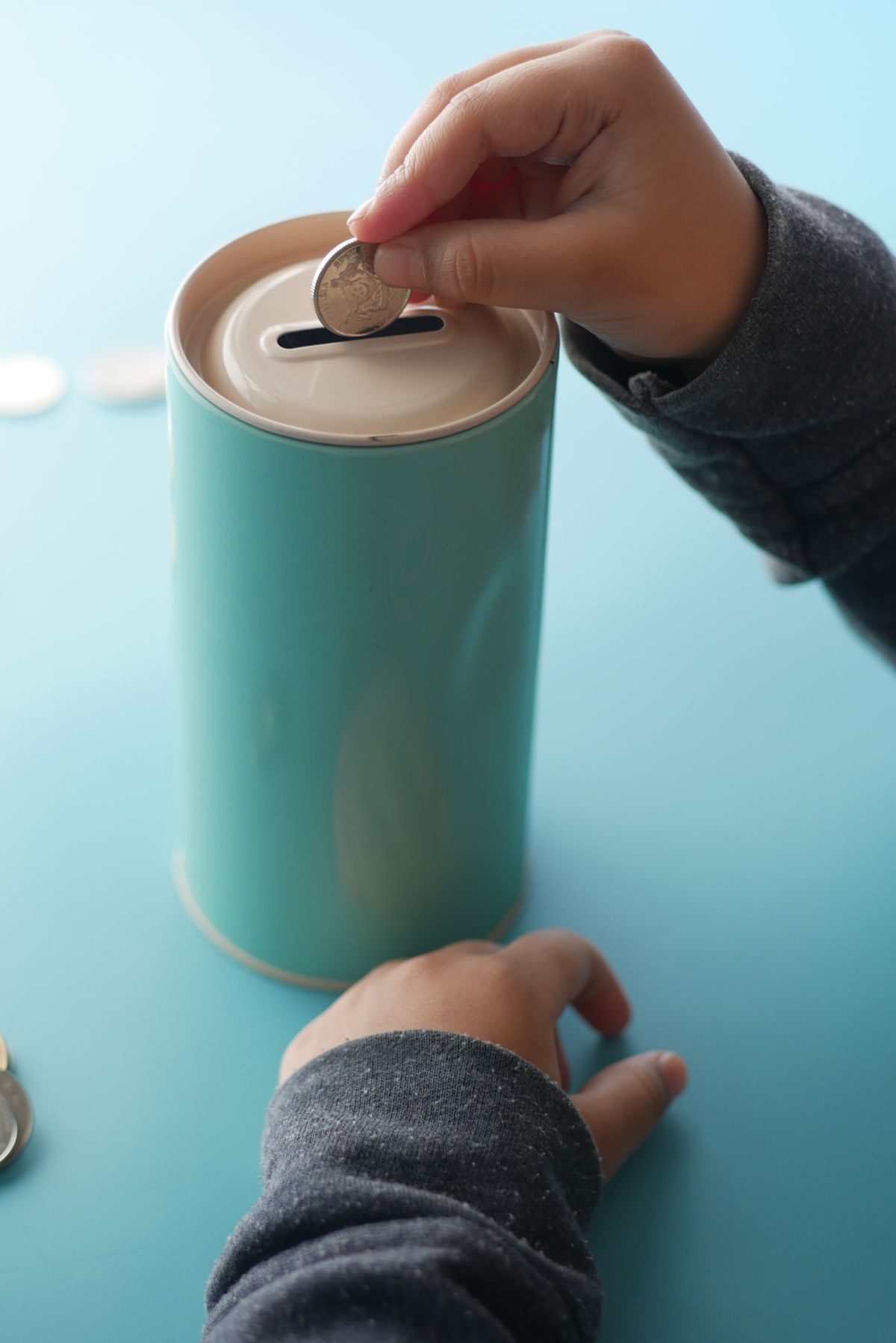
The three jars
You don't need anything fancy. Three clear jars (or cups, or envelopes) with a picture on each one: a piggy bank for Save, a toy for Spend, and a heart for Share.
When your child gets money — birthday cash from a grandparent, a coin found in the couch, a dollar for helping — split it together. A simple split that works well at this age:
- Save: the biggest share, for something later.
- Spend: a smaller share, for something now.
- Share: the smallest share, for someone else.
Clear jars matter: kids this age can't count well yet, but they can see a jar getting fuller. That visible growth is the whole lesson.
Example: a $5 birthday gift
Grandma gives your child $5. Together you put $3 in Save, $1 in Spend, and $1 in Share. Your child picks a small toy for the Spend dollar right away — and the Save jar is already visibly fuller than it was. That's the lesson, in one minute.
Waiting is a money skill
The hardest part of money for a four-year-old is waiting. The Save jar is where they practice. Help them pick something to save for — a toy, a book, a trip to the ice cream shop — and put a picture of it on the jar. Every time money goes in, point at the picture: "We're getting closer."
Keep the goal small and close. A goal that takes a month feels like forever to a small child; a goal that takes a week or two feels like a win. When they reach it, let them pay at the register themselves. Handing over their own saved money and getting something back is a memory that sticks.
Money comes from work
Kids this age often think money comes from the wallet, or the wall machine at the bank. It helps to connect the dots in plain words: "Grown-ups do work, work pays money, and money buys things." Point it out in real life — the cashier at the store is working, the person fixing the road is working. You don't need a lecture; one sentence, said a few times in different places, is enough.
Sharing, on purpose
The Share jar is small, and that's the point — giving is a habit, not an amount. When the Share jar has a few dollars in it, let your child choose what to do with it: a toy for a toy drive, coins in a donation box, a treat for a sibling. Let them hand it over themselves. Giving feels good when it's their choice, not a rule.
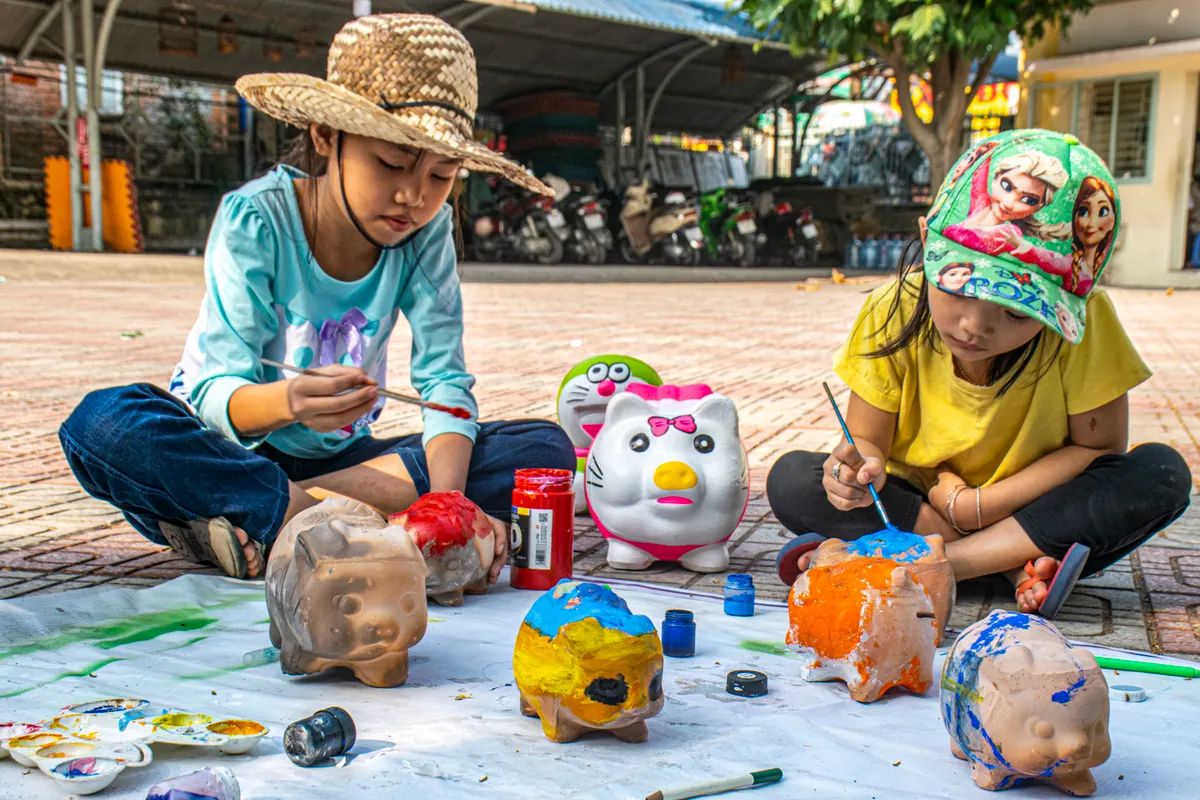
More hands-on activities
Small children learn with their hands, not with explanations. A few activities that teach the same ideas as the jars, in different ways:
- Sorting coins. Dump out a pile of coins and sort them by size, then by color, then by "big" and "little." You're not teaching values yet — you're teaching that coins are different from each other, which is the first step toward counting them.
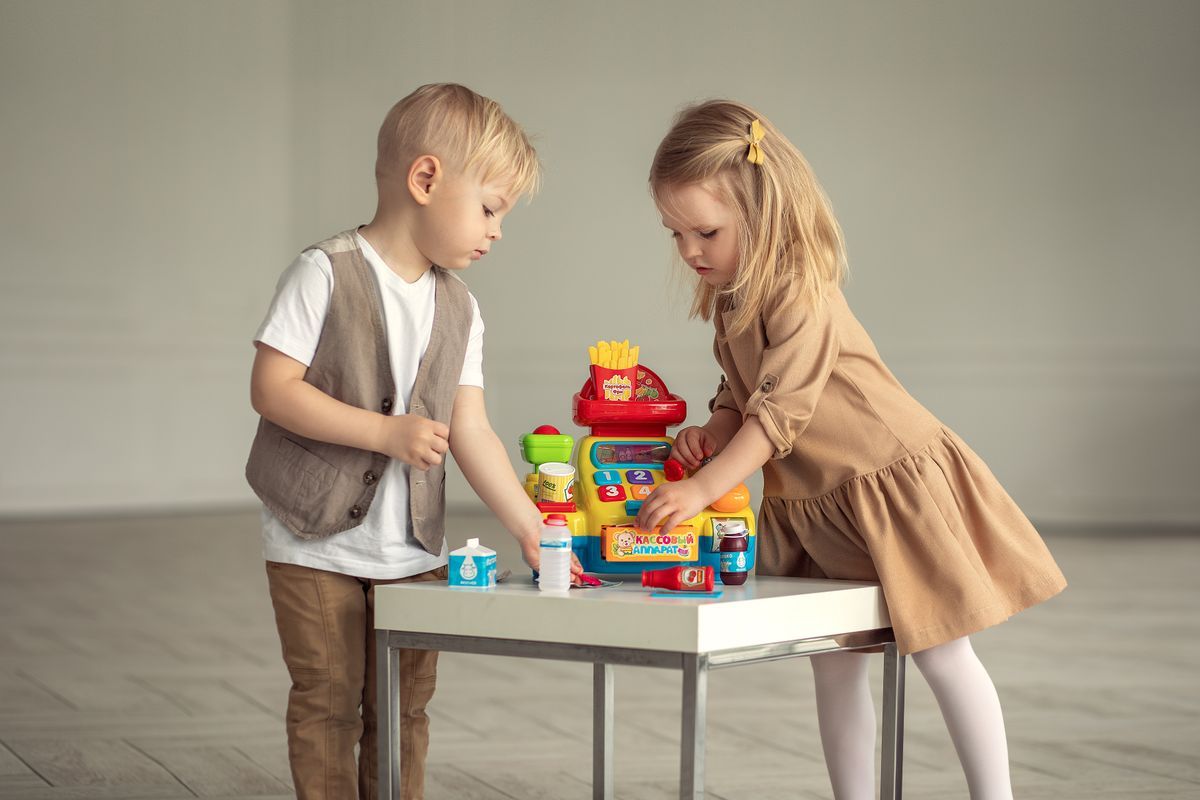
- Play store. Set up a little shop at home with toys and price tags made from sticky notes. Give your child a few coins and let them "buy" something. Then switch roles — now they're the shopkeeper, and they have to give change (even if the math is just "here's a coin back"). Role-play makes the store less mysterious.
- Grocery helper. At the store, hand your child one item to find and put in the cart. At checkout, let them watch the total on the screen and hand the cashier the money. Seeing the number go up as things go in is a quiet lesson in "everything costs something."
- Counting the Save jar. Once a week, count the Save jar together — out loud, one coin at a time. It doesn't matter if they lose count. What matters is the ritual: we check, we see it grow, we get closer to the picture on the jar.
Waiting games
Waiting is the hardest money skill at this age, and it's worth practicing on purpose — as a game, not a test. A few that work:
- The countdown chain. If the goal is a week away, make a paper chain with one link per day. Each morning, tear off a link together. The chain getting shorter makes waiting visible — and a little bit fun.
- "Wait until Friday." Pick one small thing they want and agree to wait until Friday for it. When Friday comes, buy it together and celebrate the wait itself: "You waited all week, and here it is." The praise is for the waiting, not the buying.
- Two choices, one wait. Offer a small treat now, or a bigger treat after a short wait. Let them choose — and don't correct the choice. Kids who practice choosing the wait start to trust that waiting pays off.
If they can't wait, that's normal — waiting is genuinely hard at this age. Shorten the goal instead of pushing through tears. A one-week wait that succeeds teaches more than a one-month wait that ends in a meltdown.
Simple scripts: what to say
You don't need the perfect words. A few short lines, used over and over, do most of the teaching:
- At the store: "We have money for the things on our list. That toy isn't on the list today — we can put it on the wish list for later."
- When they ask for something: "That's a want, not a need. Wants are the things we save for — shall we add it to your Save jar picture?"
- When money appears: "Money comes from work. Grown-ups work, work pays money, and money buys things."
- When they see a card used: "The card isn't free money — it takes money from our bank account. The bank keeps our money safe, and the card lets us spend it."
- When they want to share: "You get to choose who the Share money goes to. Who would you like to help?"
Sharing ideas for little kids
Sharing works best when it's concrete and the child chooses. Some ideas that land well at this age:
- Pick a toy in good condition to give to a toy drive — and let them carry it in themselves.
- Put coins in a donation box at a store or place of worship, and let them drop the coins in.
- Use Share money to buy a treat for a sibling or a friend — giving to someone they know feels real.
- Make something together to give away — a drawing, a batch of cookies — so giving isn't only about money.
Don't force sharing of a favorite toy or punish a child for not wanting to share. Forced giving teaches resentment, not generosity. The Share jar is for money they've set aside on purpose — that's the habit.
What not to do at this age
- Don't lecture about prices. "That costs $12" means nothing to a child who can't count to 12. Talk about waiting, choosing, and sharing instead — the numbers come later.
- Don't use money as a punishment. Taking away savings or allowance for bad behavior turns money into a weapon and teaches fear, not skill. Keep money and discipline separate.
- Don't say "we have no money" when you pay by card. Kids take it literally — and then they're confused when you buy groceries anyway. Say "we're not buying that today" instead.
- Don't expect them to understand "expensive." A $5 toy and a $50 toy look the same to a small child. They'll learn value by handling money themselves, not by being told.
- Don't make it a test. If the jars become a chore or a source of arguments, put them away for a week and try again. The goal is a relaxed habit, not a perfect performance.
Try this week
Set up the three jars together and decorate them. The first time your child gets any money — even a single coin — split it into the jars together and name each job out loud: "Save, spend, share." That's the whole first lesson.
What not to worry about yet
Don't worry about counting, adding, or prices. A three-year-old doesn't need to know that a toy costs $12. They need to know that money is limited, that waiting gets you something, and that sharing is part of it. The numbers come later — and they come easier once the ideas are in place.